
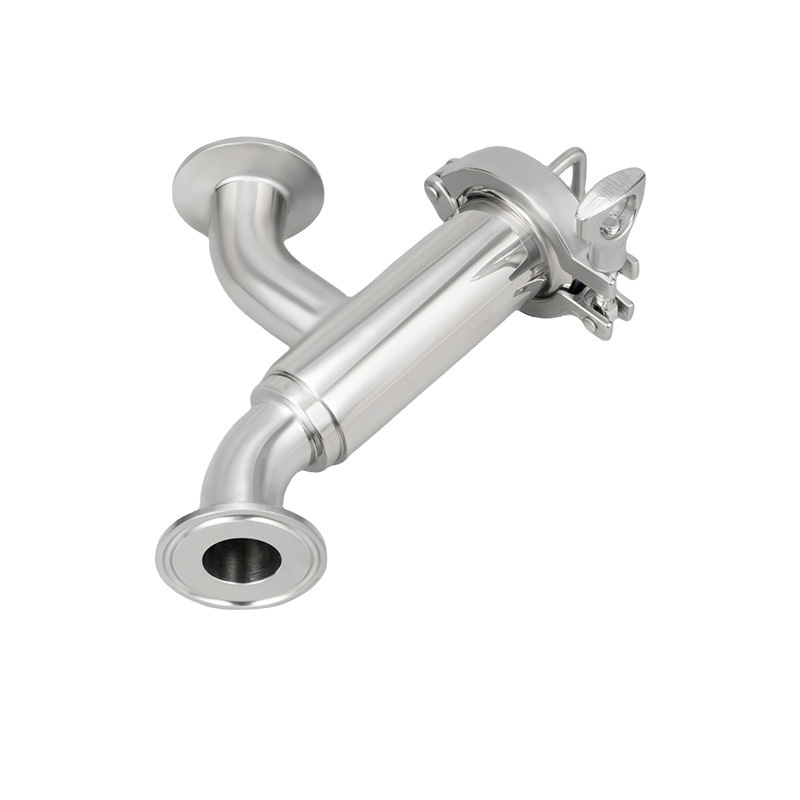
Welded Y-Type Strainer
The Saifilter welded Y-type strainer is a cleanable stainless steel pipeline strainer built to capture solid particles before they reach pumps, instruments, and other downstream equipment. Its angled filter chamber provides direct access to a removable metal element for routine inspection and cleaning.
Reference dimensions are available for DIN sizes DN25 through DN100 and inch sizes 1″ through 4″. Available options include 304 or 316L stainless steel, several surface finishes, and filter elements within the published 10 to 400 mesh range. Element construction, connections, seals, and operating limits are matched to the application and finalized with the order.
How the Y-Type Strainer Works
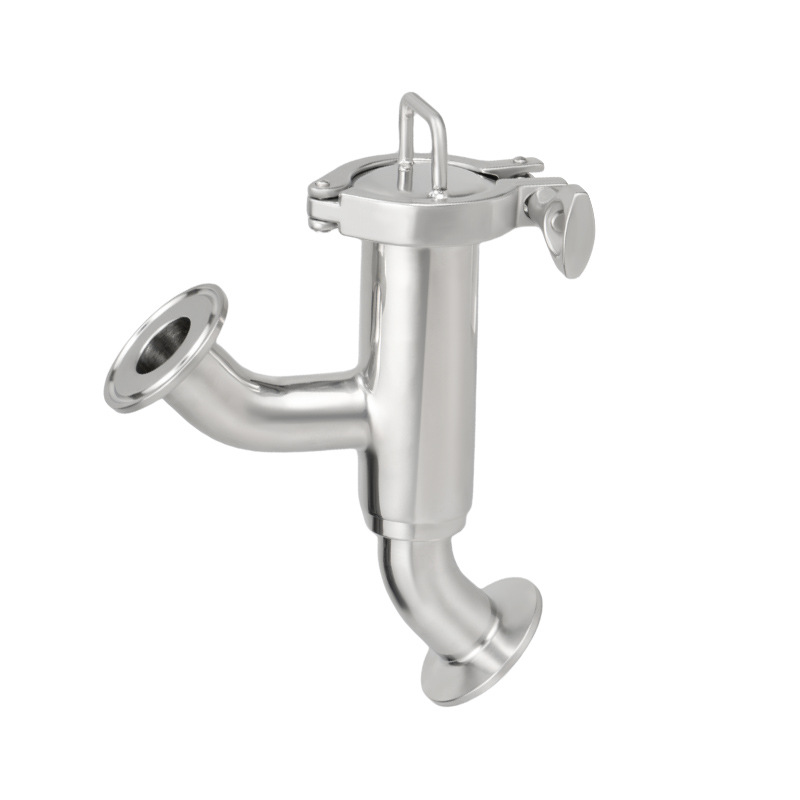
Process fluid travels through the main body while the filter element sits in a chamber angled 45 degrees from the primary flow path. Solids collect at the element, and the screened fluid continues downstream. When service is required, the element is removed through the end of the angled chamber rather than through the pipeline connections.
- 45-degree filter chamber in the reference design
- Removable metal element for inspection and cleaning
- Welded stainless steel housing construction
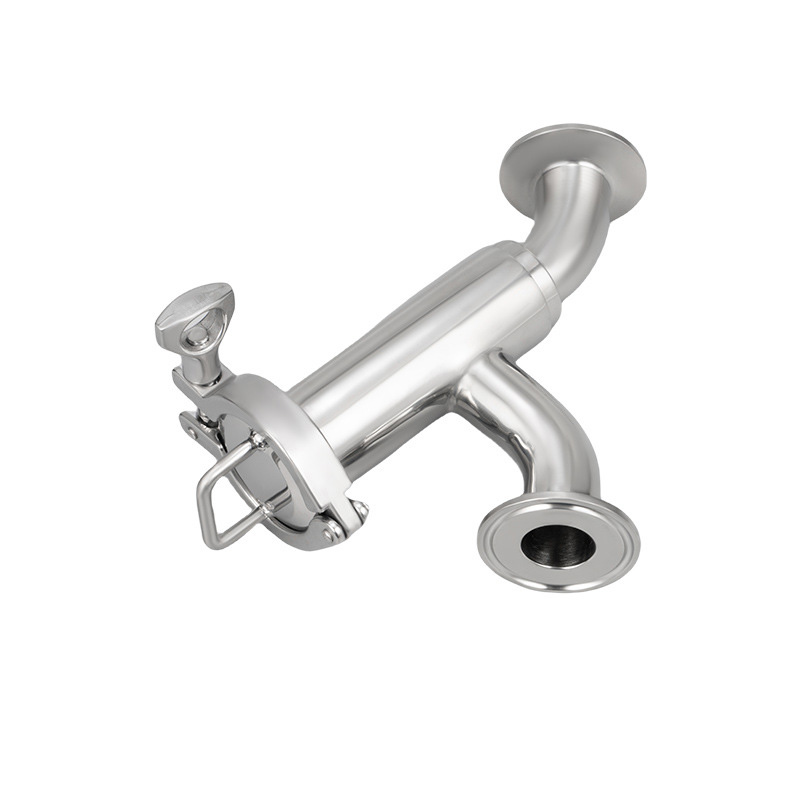
- Clamp-retained and screw-operated service-cover options
- Connections and screen construction configured for the application
For a different piping layout, compare the welded straight strainer, which uses a straight-through housing arrangement. An angle-type strainer is designed for a filtration point that also needs a 90-degree change in piping direction.
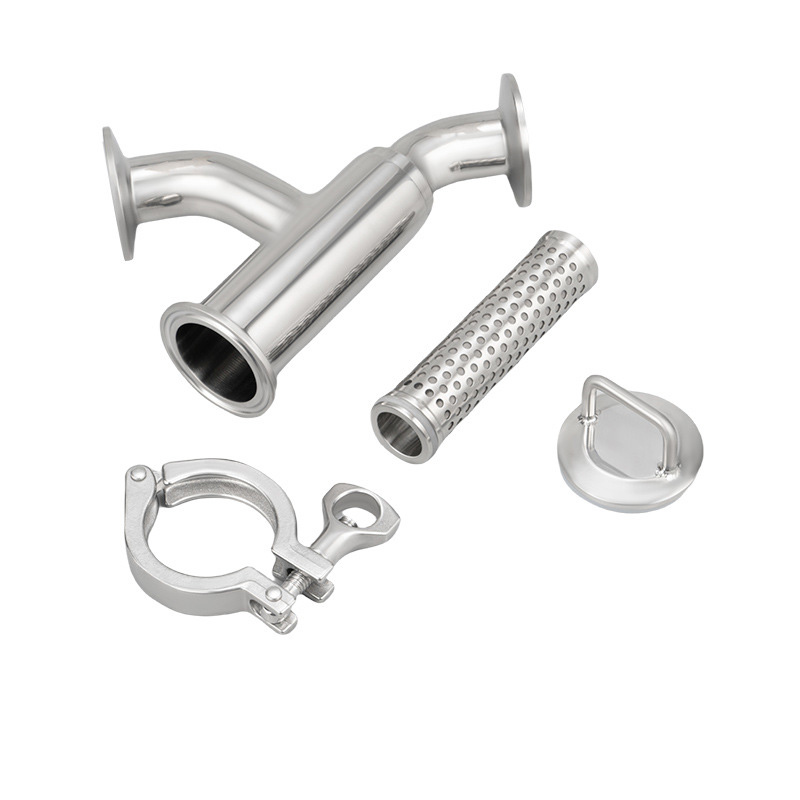
Inside the Strainer
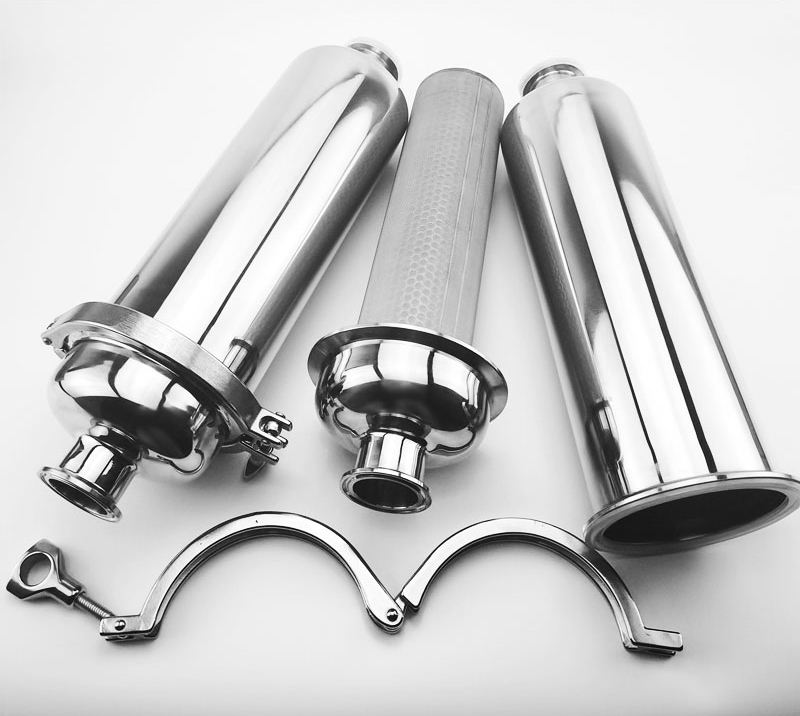
Inside the angled chamber, a cylindrical screen lifts out through the service opening. In the disassembled view, the screen has a perforated wall and the cover is secured by a clamp. Depending on the required retention, the perforated cylinder can provide coarse screening or support a finer mesh layer. Screen rating, seal material, closure design, and connection dimensions are specified for the selected configuration.
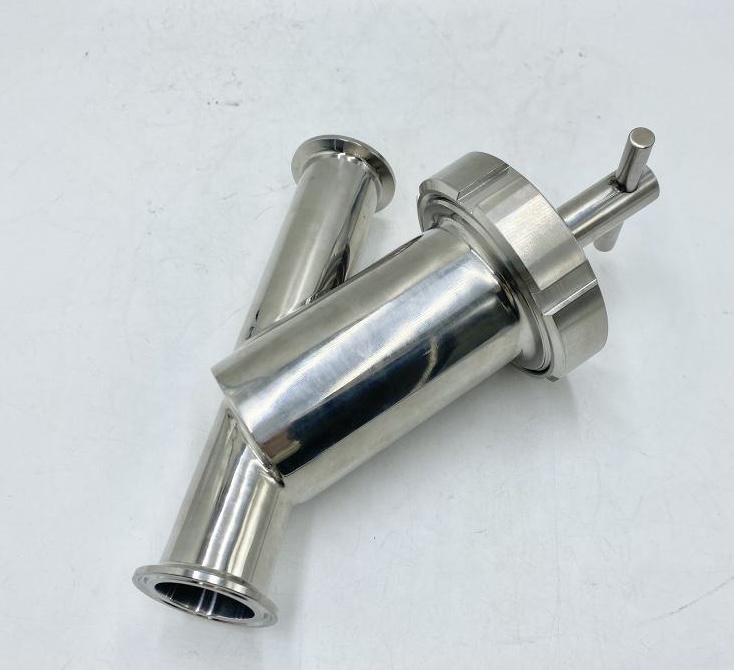
Welded Y-Type Strainer Technical Data
| Parameter | Reference Specification |
|---|---|
| Product type | Welded Y-type pipeline strainer |
| Filter-chamber arrangement | 45 degrees in the product-specific drawing |
| Product-specific reference sizes | DIN DN25-DN100 / Inch 1″-4″ |
| Available material grades | 304 or 316L stainless steel |
| Filtration range | 10-400 mesh; screen construction selected for the application |
| Finish options | Mirror polished, brushed/matte polished, or sandblasted |
| Optional construction | Insulation jacket based on project requirements |
| Project-defined details | Connections, seals, pressure, temperature, and closure configuration |
Specification note: the dimensions below apply to the welded Y-type strainer reference drawing. Material, finish, mesh, and jacket options are selected to suit the size and service conditions.
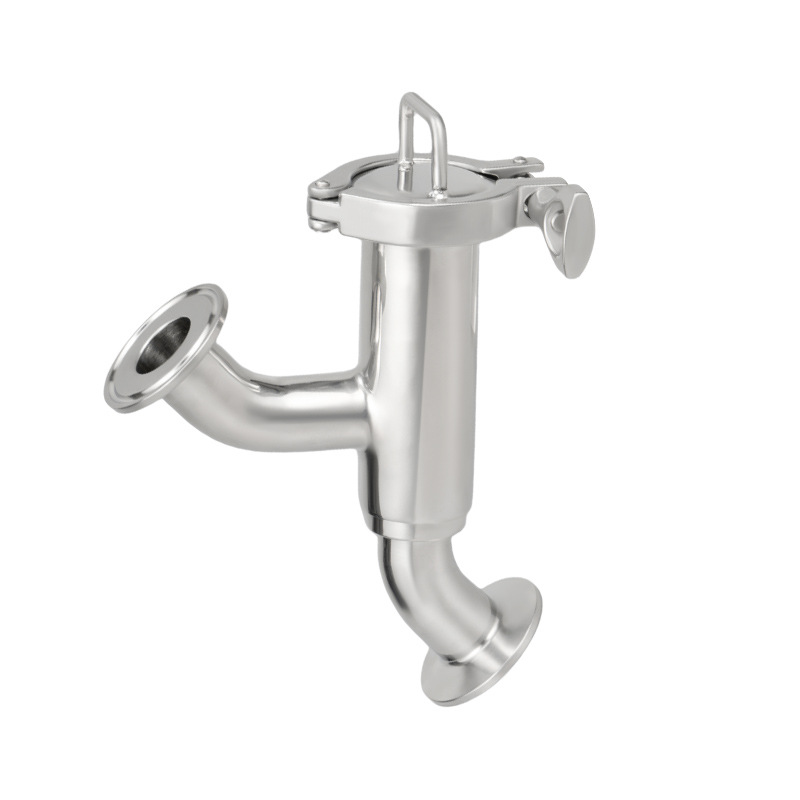
DIN Reference Dimensions (mm)
| DN | d1 | d2 | d3 | L |
|---|---|---|---|---|
| 25 | 26 | 70 | 76.2 | 235 |
| 32 | 32 | 70 | 76.2 | 240 |
| 40 | 38 | 70 | 101.6 | 260 |
| 50 | 50 | 70 | 101.6 | 280 |
| 65 | 66 | 114.3 | 114.3 | 320 |
| 80 | 81 | 129.0 | 114.3 | 375 |
| 100 | 100 | 139.7 | 154 | 400 |
Inch Reference Dimensions (mm)
| Size | d1 | d2 | d3 | L |
|---|---|---|---|---|
| 1″ | 22.1 | 70 | 76.2 | 213 |
| 1-1/2″ | 34.8 | 70 | 101.6 | 242 |
| 2″ | 47.5 | 70 | 114.3 | 300 |
| 2-1/2″ | 60.2 | 114.3 | 114.3 | 348 |
| 3″ | 72.9 | 114.3 | 154 | 378 |
| 4″ | 97.4 | 139.7 | 154 | 468 |
All dimensions are in millimeters and come from the welded Y-type strainer data sheet. The DIN and inch tables are separate size series rather than direct dimensional equivalents. Final connection details, service clearance, and piping layout follow the order drawing.
Selecting the Filter Element
Start with the smallest particle that needs to be retained, then account for solids loading, fluid properties, flow rate, and allowable pressure drop. Mesh count alone is not enough to define the opening: wire diameter and weave pattern also determine the clear aperture.
For finer screening, a perforated support can be lined with stainless steel woven mesh. Applications that need a more rigid or multilayer medium may use another type of stainless steel filter element or a sintered mesh construction. Element diameter, length, end geometry, and flow direction are matched to the housing.
- Specify the target particle size or required screen opening
- Identify wire diameter and weave when woven mesh is used
- Treat perforated support and fine filtering layer as separate specifications
- Evaluate clean and loaded pressure drop for the actual process
- Replace elements with damaged mesh, support, welds, or seating surfaces
Installation, Inspection, and Cleaning
Check flow direction and clearance
Install the housing in the specified orientation, with enough room to open the cover and pull out the full element.
Isolate and depressurize the line
Shut down the process, isolate both sides, drain the housing, and verify zero pressure before opening the service closure.
Inspect the element and seal
Look for blocked openings, damaged mesh, cracked welds, distortion, worn seating surfaces, or chemical attack on the gasket.
Clean and reassemble
Choose a cleaning method that will remove the residue without damaging the element, then replace worn parts before returning the line to service.
Cleaning follows the same basic principles described in the stainless steel filter cartridge guide: remove residue without damaging the media, inspect the support and welds, and replace an element that no longer seats or screens correctly. The actual cleaning method should match the process fluid and retained solids.
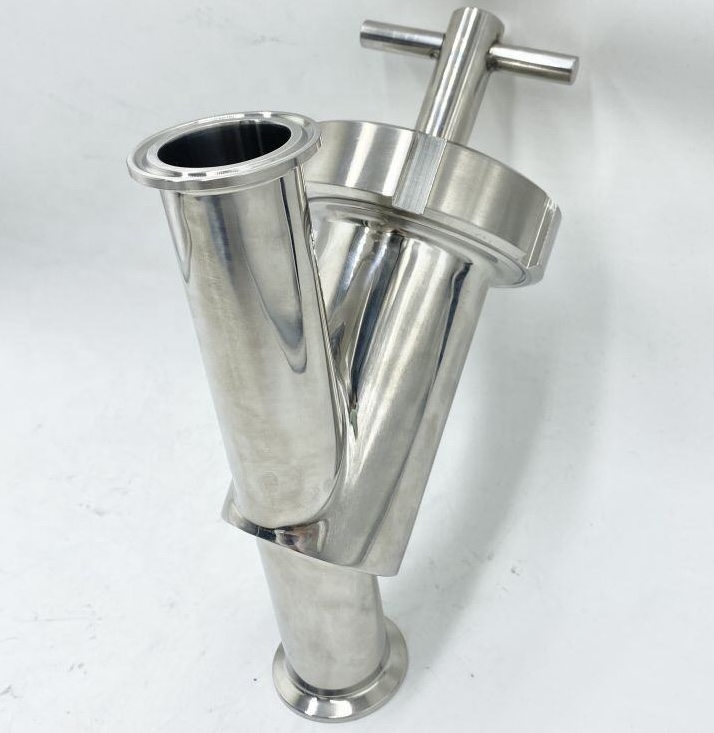
Where Y-Type Strainers Are Used
These strainers fit process lines that need a compact, cleanable metal screen ahead of sensitive equipment. Potential duties include food and beverage lines, dairy processing, pharmaceutical and fine-chemical service, edible-oil processing, and water treatment. Final selection depends on the fluid, retained solids, temperature, pressure, connections, and cleaning requirements.
Pumps and Instruments
Screen out debris that could restrict small passages, damage moving parts, or interfere with downstream instruments.
Process-Liquid Screening
Remove unwanted solids from transfer lines using product-contact materials, seals, and finishes selected for the process.
Liquid Transfer Lines
Provide accessible screening where routine removal and cleaning of the element are part of the operating plan.
Specified Process Duties
Configure the materials, finish, seals, connections, documentation, and cleaning method around the project requirements.
Particulate Pre-Screening
Capture suspended debris before downstream equipment, using an opening selected for the flow and expected solids load.
Compatible Liquid Service
Screen process liquids after checking viscosity, corrosion compatibility, particle characteristics, and cleaning method.
If the solids load would require frequent manual cleaning, an automatic self-cleaning filter may be a better fit for the process.
What to Specify
Process and Filtration Data
- Fluid name, composition, density, and viscosity
- Normal and maximum flow rate
- Operating and design pressure and temperature
- Particle size distribution and expected solids loading
- Required screen opening and acceptable pressure drop
- Cleaning method and expected service interval
Mechanical and Documentation Data
- Pipe size, connection type, and connection standard
- Housing and element material grade
- Service-cover and gasket requirements
- Surface finish, installation orientation, and removal clearance
- Required dimensions and approved flow direction
- Drawing, material certificate, inspection, or documentation requirements
WHAT MAKES THIS A Y-TYPE STRAINER?
The filter chamber branches away from the main flow path to create the characteristic Y-shaped housing. In the reference design, the chamber is set at 45 degrees.
WHICH SIZES ARE LISTED IN THE PRODUCT-SPECIFIC DRAWING?
The DIN table covers DN25 through DN100, and the separate inch table covers 1″ through 4″. These are separate documented series and should not be treated as direct dimensional equivalents.
HOW DOES IT DIFFER FROM STRAIGHT AND ANGLE-TYPE STRAINERS?
The Y-type strainer places the service chamber at an angle to the main flow path. A welded straight strainer uses a straight-through housing arrangement, while an angle-type strainer accommodates a 90-degree change in piping direction.
DOES 100 MESH ALWAYS MEAN THE SAME MICRON OPENING?
No. Wire diameter and weave pattern also affect the clear opening. Select the mesh construction by the particle size the strainer needs to retain, not by mesh count alone.
HOW SHOULD PRESSURE DROP BE EVALUATED?
Clean and loaded pressure drop depend on flow rate, fluid density and viscosity, connection size, element geometry, open area, and retained solids. Because no standard pressure-drop curve is available for this product, the calculation needs the actual operating data.
CAN THE METAL ELEMENT BE CLEANED AND REUSED?
The element is removable and intended for inspection and cleaning. Reuse is acceptable only when the filtering surface, support, welds, seating surfaces, and gasket remain suitable for service.
WHICH DETAILS MUST BE CONFIRMED BEFORE ORDERING?
Confirm the process fluid, flow rate, pressure, temperature, size, connection standard, material, element opening, gasket, closure style, finish, flow direction, dimensions, service clearance, and documentation requirements.
 Welded Straight Strainer
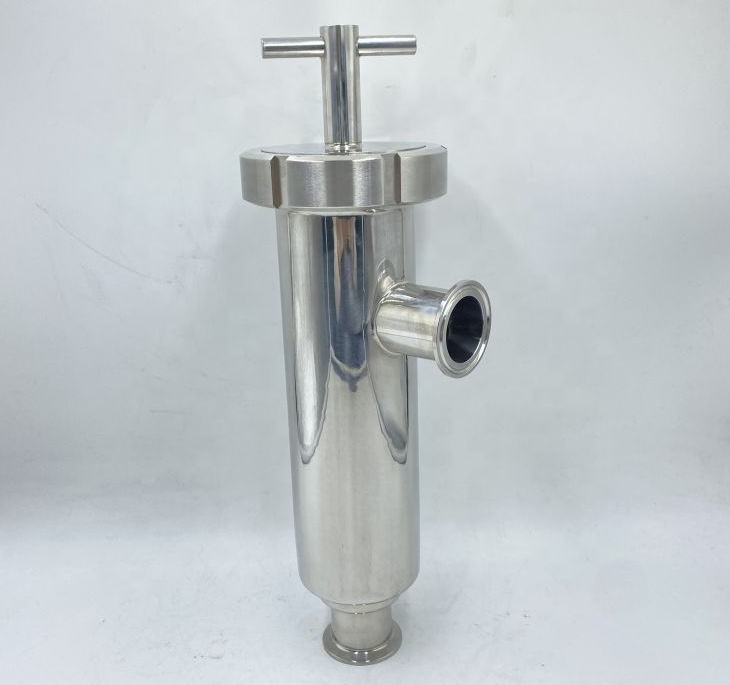 Angle-Type Strainer
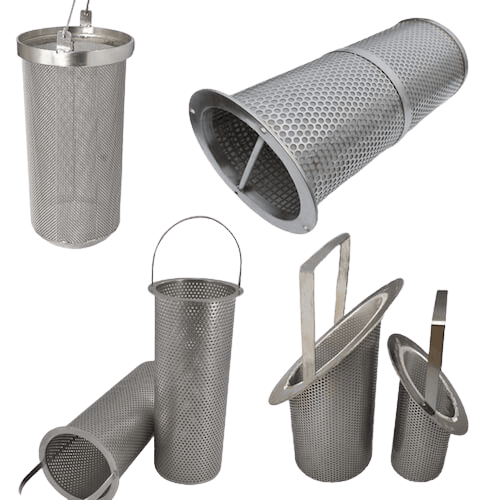 Industrial Filter Strainer Baskets
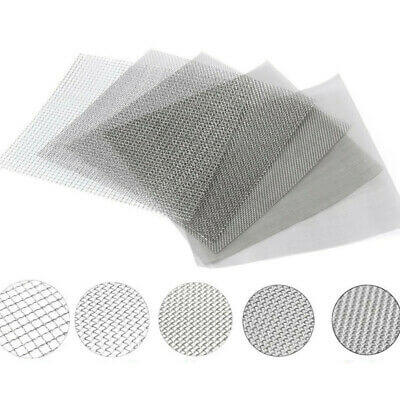 Stainless Steel Filter Mesh
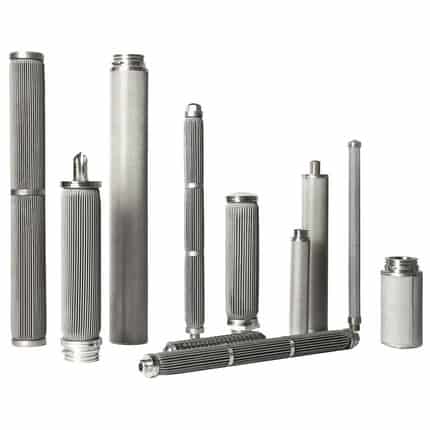 Stainless Steel Filter Elements
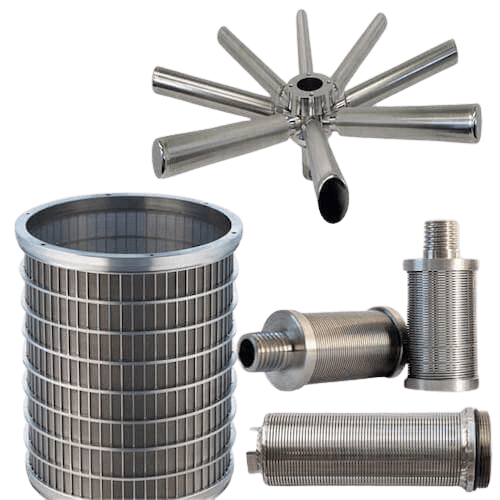 Wedge Wire Filter Elements
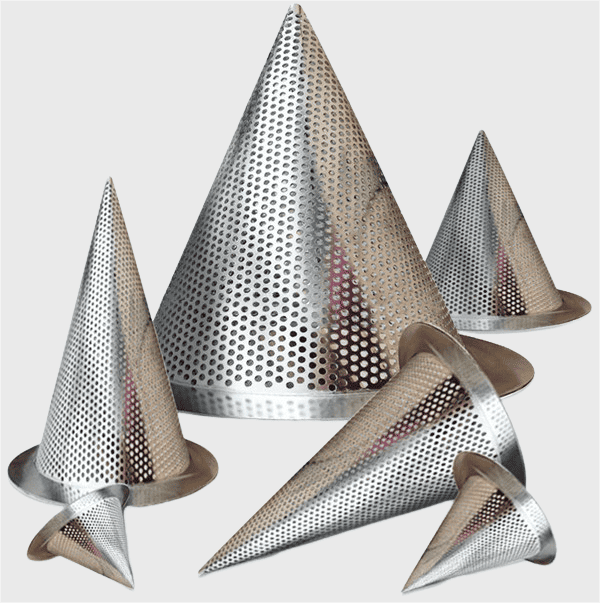 Temporary Strainers
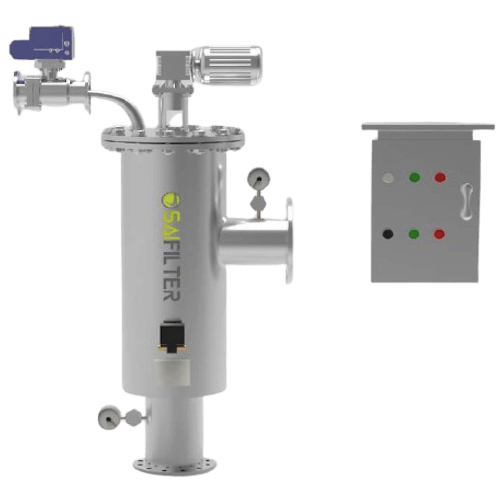 Automatic Self-Cleaning Filter