
The paper industry prefers slotted wedge wire filters because they handle fibrous slurry with high flow, low clogging risk, strong wear resistance, and reliable solid-liquid separation. In paper production, filtration is not just about removing dirt. It also protects pumps, screens, and process equipment while helping maintain pulp quality, water reuse, and continuous production.
Among many filtration options, the slotted wedge wire filter is widely used because its V-shaped wire profile creates precise slots that allow liquid to pass while retaining fibers, shives, knots, and other solids. Its durable welded structure makes it suitable for pulp screening, dewatering, white water filtration, wastewater treatment, and machine protection in demanding paper mill environments.
Why Do Paper Mills Need Reliable Filtration?
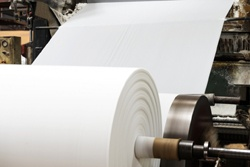
Paper mills need reliable filtration because pulp and process water contain fibers, shives, knots, fillers, sand, and other contaminants that can affect paper quality and damage equipment. These materials must be separated without stopping the process or creating excessive pressure drop.
Paper production is a high-flow process. Pulp slurry and white water can carry a heavy load of suspended solids, so ordinary filter media may blind, clog, or wear quickly. When filtration fails, the result can be poor sheet formation, surface defects, blocked nozzles, higher maintenance cost, and unplanned downtime.
Reliable filtration helps paper manufacturers:
- Remove unwanted solids from pulp slurry
- Recover useful fibers from process water
- Support water recycling and reduce fresh water demand
- Protect pumps, valves, spray nozzles, and downstream equipment
- Reduce downtime caused by clogging and screen failure
- Improve consistency in paper quality
What Is a Slotted Wedge Wire Filter?
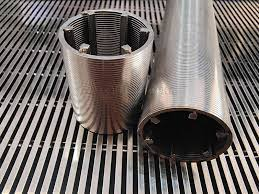
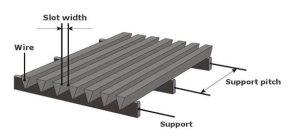
A slotted wedge wire filter is a metal filtration element made from V-shaped profile wires welded to support rods, creating continuous and precise slot openings. The slots act as the filtration passages. Liquid passes through the slots, while larger solids are retained on the screen surface.
The wedge-shaped wire profile is important. The surface opening is controlled, while the space below the opening is wider. This structure helps reduce particle wedging and makes the screen easier to clean compared with many flat or woven screen surfaces.
Wedge wire filters can be made in different forms for paper industry equipment, including panels, cylinders, screen baskets, sieve bends, curved screens, and custom elements. The best form depends on the paper process, flow direction, solids load, cleaning method, and installation space.
How Does Slotted Wedge Wire Work in Paper Filtration?
Slotted wedge wire works by allowing water or filtrate to pass through continuous slots while retaining fibers and contaminants on the screen surface. In pulp and paper applications, the filter must handle fibrous material without quickly blinding the screen.
The process usually works in three steps:
- Pulp slurry, white water, or wastewater flows toward the wedge wire surface.
- Liquid passes through the slots while larger solids are retained.
- The retained solids are removed by flow direction, gravity, mechanical cleaning, backwashing, or process movement depending on the equipment design.
Because the slots are continuous and precisely formed, wedge wire can support high flow while maintaining consistent separation. This is why it is used in pulp screening, dewatering, fiber recovery, and water recycling systems.
Why the Paper Industry Prefers Slotted Wedge Wire
Paper mills prefer slotted wedge wire because it solves several common filtration problems at the same time: clogging, high flow demand, abrasive slurry, fiber recovery, and repeated cleaning.
| Paper Mill Challenge | How Slotted Wedge Wire Helps |
| Fibrous slurry can clog ordinary screens | V-shaped slots reduce wedging and make the screen easier to clean |
| High process flow is required | Continuous slots and open area support high throughput with controlled pressure drop |
| Abrasive fibers and contaminants cause wear | Welded metal construction improves durability in harsh process conditions |
| Paper quality depends on clean pulp | Precise slot openings help remove knots, shives, and unwanted particles |
| Water reuse is important | The screen helps separate fibers and suspended solids from white water or process water |
| Downtime is costly | Cleanable construction and long service life help reduce maintenance interruptions |
Key Advantages: Anti-Clogging, High Flow, Durability, and Customization
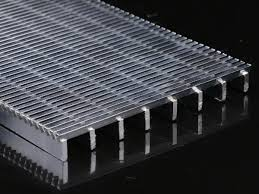
Anti-Clogging Slot Design
The V-shaped slot design helps reduce clogging because particles are less likely to become trapped deep inside the screen opening. Fibers and solids are retained on the surface, while liquid passes through the slot. This helps keep flow more stable and makes cleaning easier.
High Flow and Low Pressure Drop
Slotted wedge wire filters support high flow because their continuous slots provide open flow paths. In paper production, this is important because pulp and process water often move at high volumes. A well-designed wedge wire screen can help maintain throughput while controlling pressure drop.
Durability in Harsh Paper Mill Conditions
Paper mill filtration can involve abrasion, chemicals, heat, and continuous operation. Slotted wedge wire filters are commonly made from stainless steel or other corrosion-resistant alloys, helping them resist wear and maintain performance over long service periods.
Customization for Different Paper Processes
Slotted wedge wire filters can be customized by slot size, profile wire, support rod, material, screen shape, and flow direction. This allows the filter to match coarse screening, fine screening, dewatering, fiber recovery, white water filtration, or wastewater pretreatment needs.
Applications in the Paper Industry
Slotted wedge wire filters are used throughout paper manufacturing, especially where fibrous slurry, process water, or wastewater must be separated efficiently.
| Application | What It Removes or Controls | Why Wedge Wire Helps |
| Pulp screening and cleaning | Knots, shives, bark, sand, and other contaminants | Stable slots help produce cleaner and more consistent pulp |
| Dewatering | Water from fiber slurry | Open slot area supports drainage and high throughput |
| White water filtration | Fibers and suspended solids from process water | Supports fiber recovery and water reuse |
| Wastewater pretreatment | Coarse solids and fiber load before downstream treatment | Reduces solids burden on later treatment equipment |
| Equipment protection | Debris that may block nozzles, pumps, or valves | Protects downstream machinery and reduces maintenance risk |
| Fiber recovery and thickening | Reusable fibers from diluted process streams | Improves resource recovery and process efficiency |
Water Treatment and Recycling
Water treatment and recycling are important in sustainable paper production. Slotted wedge wire filters help remove fibers and suspended solids from process water, making it easier to reuse water in the production cycle and reduce the load on downstream treatment systems.
Pulp Screening and Cleaning
In pulp preparation, slotted wedge wire filters help remove knots, shives, and other contaminants. Cleaner pulp supports better sheet formation, fewer defects, and more stable machine operation.
Dewatering and Fiber Recovery
During dewatering and fiber recovery, wedge wire screens allow water to pass while retaining useful fibers. This supports resource recovery and helps reduce waste in the paper process.
How to Choose Slotted Wedge Wire for Paper Filtration
To choose the right slotted wedge wire filter for paper filtration, match the slot design, material, screen shape, and cleaning method to the pulp or water stream. The correct filter depends on process conditions rather than one universal specification.
Selection Checklist
- Application: pulp screening, dewatering, white water filtration, wastewater pretreatment, or equipment protection
- Feed type: pulp slurry, process water, white water, wastewater, or chemical stream
- Target solids: fibers, shives, knots, fillers, sand, or other contaminants
- Slot size and slot tolerance required for the separation task
- Material: 304, 316, 316L, or another alloy based on corrosion and cleaning conditions
- Screen form: panel, cylinder, basket, sieve bend, curved screen, or custom element
- Flow direction and open area requirements
- Expected pressure drop and flow rate
- Cleaning method: backwashing, scraping, spraying, manual cleaning, or process self-cleaning
- Wear, corrosion, temperature, and chemical exposure
For paper mills, the best filter is not simply the finest slot. It is the filter that separates the target solids while maintaining stable flow, resisting clogging, and surviving the process environment.
FAQs About Slotted Wedge Wire in the Paper Industry
1. Why are slotted wedge wire filters preferred in the paper industry?
They are preferred because they handle fibrous slurry with high flow, good clog resistance, strong durability, and precise solid-liquid separation. These qualities help maintain pulp quality and reduce downtime.
2. How does slotted wedge wire reduce clogging?
The V-shaped wire profile creates slots that are narrow at the surface and wider below. This helps reduce particle wedging and makes retained fibers or solids easier to remove from the screen surface.
3. Can slotted wedge wire filters be used for paper mill wastewater?
Yes. They can be used in wastewater pretreatment to remove fibers and suspended solids before downstream treatment. The exact design depends on solids load, flow rate, cleaning method, and treatment goals.
4. Are wedge wire filters useful for white water filtration?
Yes. In white water filtration, wedge wire screens can help separate fibers and suspended solids, supporting fiber recovery and water reuse in the paper production cycle.
5. What materials are used for paper industry wedge wire filters?
Stainless steel materials such as 304, 316, or 316L are common choices, but the final material should be selected according to corrosion, temperature, chemical exposure, and cleaning conditions.
6. Is wedge wire better than woven mesh or perforated plate for paper filtration?
It depends on the process. Wedge wire is often better when anti-clogging behavior, high flow, durability, and precise slot openings matter. Woven mesh or perforated plate may still be suitable for simpler or lower-demand applications.
Wrap Up
The paper industry prefers slotted wedge wire filters because they combine anti-clogging slot design, high flow capacity, durable construction, and process-specific customization. These advantages make them especially useful for pulp screening, dewatering, white water filtration, fiber recovery, wastewater pretreatment, and equipment protection.
Choosing the right slotted wedge wire filter can help paper manufacturers improve filtration reliability, support water reuse, reduce downtime, and maintain more consistent paper quality. The final design should always match the actual pulp or water stream, required separation accuracy, flow rate, cleaning method, and operating environment.