
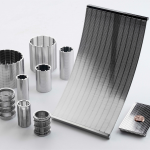
The paper industry prefers slotted wedge wire filters because they handle fibrous slurry with high flow, low clogging risk, strong wear resistance, and reliable solid-liquid separation. In paper production, filtration is not just about removing dirt. It also protects pumps, screens, and process equipment while helping maintain pulp quality, water reuse, and continuous production. Among […]
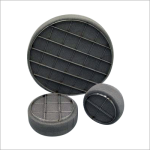
A demister pad should be specified using both process data and physical design parameters. The key information includes vessel dimensions, gas flow rate, gas velocity, liquid load, droplet size, target removal efficiency, allowable pressure drop, operating temperature, material compatibility, pad thickness, mesh density, wire diameter, support structure, and installation constraints. These parameters work together. Selecting […]
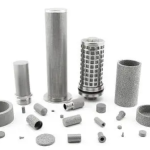
Choose annealed wire mesh when you need flexibility, ductility, easier forming, and lower cost. Choose sintered wire mesh when you need higher structural strength, stable pore size, precision filtration, pressure resistance, and long service life. The right choice depends on whether your application values formability or filtration stability more. Wire mesh is used in filtration, […]
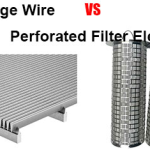
Use wedge wire filtration elements when your system needs high flow, low clogging risk, strong pressure resistance, precise slot openings, and long service life. Use perforated filtration elements when the application needs coarse screening, lower upfront cost, simple fabrication, or an easy-clean structure for less demanding service. Choosing between wedge wire filters and perforated filtration […]
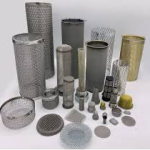
The key difference between metal fiber felt and woven wire mesh filters is the filtration mechanism: metal fiber felt works mainly as a depth filter, while woven wire mesh works mainly as a surface filter with defined openings. Choose metal fiber felt when you need fine particle capture, high dirt-holding capacity, high porosity, and stable […]