
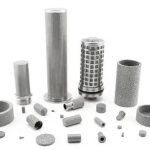
Choose annealed wire mesh when you need flexibility, ductility, easier forming, and lower cost. Choose sintered wire mesh when you need higher structural strength, stable pore size, precision filtration, pressure resistance, and long service life. The right choice depends on whether your application values formability or filtration stability more. Wire mesh is used in filtration, […]
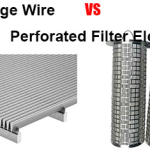
Use wedge wire filtration elements when your system needs high flow, low clogging risk, strong pressure resistance, precise slot openings, and long service life. Use perforated filtration elements when the application needs coarse screening, lower upfront cost, simple fabrication, or an easy-clean structure for less demanding service. Choosing between wedge wire filters and perforated filtration […]
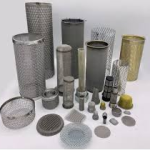
The key difference between metal fiber felt and woven wire mesh filters is the filtration mechanism: metal fiber felt works mainly as a depth filter, while woven wire mesh works mainly as a surface filter with defined openings. Choose metal fiber felt when you need fine particle capture, high dirt-holding capacity, high porosity, and stable […]

Demister pads remove fine liquid droplets from gas or vapor streams, helping prevent liquid carryover, corrosion, fouling, product loss, and downstream equipment damage. They are commonly installed in separators, scrubbers, columns, evaporators, steam drums, compressors, and gas treatment systems where gas-liquid separation is critical. If you have foggy gas flow, corrosion after separation equipment, liquid […]

Choose sintered metal fiber filtration when your process needs high dirt-holding capacity, low pressure drop, high permeability, fine particle capture, cleanability, and resistance to heat, pressure, and corrosion. It is especially useful in demanding industrial systems where ordinary filter media may clog too quickly, deform, degrade, or require frequent replacement. Sintered metal fiber filtration is […]