
A sparger in a fermenter introduces air, oxygen, or another process gas into the fermentation medium through porous media or small openings. The resulting bubbles increase gas-liquid contact and support oxygen transfer and mixing during fermentation.
This guide focuses specifically on how spargers are used in fermenters, which designs are most relevant to fermentation, and how process conditions such as gas flow, vessel size, liquid compatibility, placement, and cleaning affect selection. For a broader overview of sparger designs, materials, and industrial applications, see our sparger guide.
How Does a Sparger Work in a Fermenter?
Gas is supplied from an external source, such as compressed air or an oxygen system, and passes through the sparger into the liquid. Depending on the sparger design, the gas exits through pores or openings as bubbles that disperse through the fermentation medium.
The size and distribution of those bubbles influence gas-liquid contact. Fine bubbles provide more interfacial area, while larger openings can support higher gas flow. The appropriate balance depends on the fermentation process, oxygen-transfer requirement, liquid characteristics, and vessel design.
Why Sparger Design Matters in Fermentation
Bubble Size and Gas-Liquid Contact
Smaller bubbles increase the surface area between gas and liquid, which can improve gas transfer when the process requires efficient oxygen delivery. Porous spargers are commonly selected when fine and relatively uniform bubbles are important.
Gas Flow and Mixing
Gas flow must be high enough to meet the process requirement without creating unnecessary agitation or foaming. Designs with larger openings can handle higher flow rates, while fine-pore designs are better suited to applications that prioritize gas dispersion.
Vessel Size and Distribution
Larger fermenters may require a larger sparger, a different configuration, or multiple spargers to distribute gas more evenly through the vessel. Poor distribution can leave areas with lower oxygen availability or weaker mixing.
Material Compatibility and Cleaning
The sparger material should be compatible with the fermentation medium and the cleaning method used in the process. Ease of inspection and cleaning is also important because deposits or blocked pores can reduce gas flow and change bubble distribution.
Types of Spargers Used in Fermenters
The most relevant sparger types differ in bubble size, gas-flow capability, mixing intensity, and maintenance requirements.
Porous Spargers
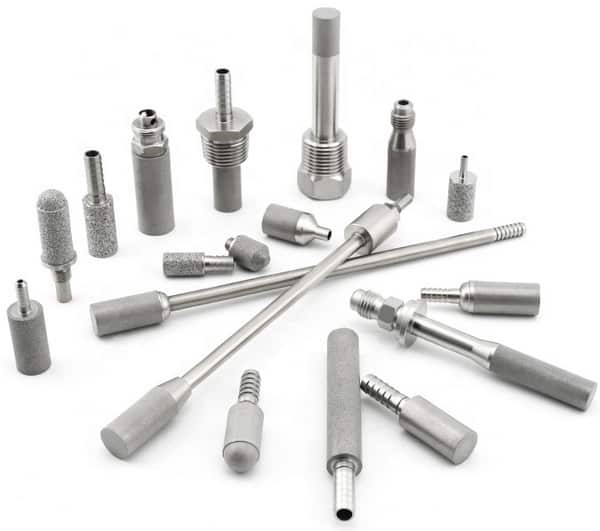
Porous spargers can be made from sintered metal, ceramic, or polymeric materials. Their interconnected pores create fine, distributed bubbles, making them suitable for fermentation and bioreactor processes that require controlled gas dispersion and efficient gas-liquid contact.
Orifice Spargers
Orifice spargers release gas through drilled or formed openings. They are useful where higher gas flow is needed or where the fermentation medium is too demanding for very fine pores. Their larger bubbles generally provide less gas-liquid surface area than porous spargers.
Jet Spargers
Jet spargers inject gas at high velocity and can provide strong mixing together with oxygen transfer. They can be useful in high-demand aerobic processes, but the higher turbulence they create should be considered when working with more shear-sensitive cultures.
Membrane Spargers
Membrane spargers use gas-permeable membranes to introduce gas into the medium. They can provide a large gas-transfer area, but membrane durability and cleaning requirements should be considered when evaluating them for a fermentation system.
| Sparger Type | Gas Dispersion | Main Strength | Key Consideration |
|---|---|---|---|
| Porous Sparger | Fine, distributed bubbles | High gas-liquid contact | Pores require regular inspection and cleaning |
| Orifice Sparger | Larger bubbles | Higher gas-flow capability and simpler openings | Lower gas-liquid surface area than fine-pore designs |
| Jet Sparger | High-velocity gas injection | Strong mixing and oxygen transfer | Higher turbulence |
| Membrane Sparger | Gas transfer through a membrane | Large gas-transfer area | Membrane durability and cleaning |
How to Choose a Sparger for a Fermenter
Start With the Fermentation Process
Identify the microorganism or yeast being used, the desired oxygen-transfer level, and the duration and operating conditions of the process. These requirements determine how much gas must be delivered and how much agitation the culture can tolerate.
Define the Required Gas Flow
Gas flow influences both oxygen delivery and mixing. A flow rate that is too low may not meet process demand, while excessive flow can increase agitation or foaming. Sparger size and opening structure should therefore be matched to the required flow range.
Match the Sparger to Vessel Size
The fermenter diameter and working volume affect sparger size, location, and configuration. Larger vessels may need multiple gas-distribution points to avoid uneven aeration.
Check Compatibility With the Fermentation Medium
The sparger material should tolerate the liquid being processed and the operating environment. Material compatibility is especially important where corrosion, contamination control, or repeated cleaning is a concern.
Plan for Cleaning and Maintenance
Evaluate how easily the sparger can be inspected and cleaned. Porous structures and fine openings can accumulate deposits over time, so cleaning access should be considered before selecting a design.
How to Use a Sparger in a Fermenter
Position the Sparger for Effective Gas Distribution
Place the sparger at a depth and location that promote gas-liquid contact and mixing without excessive splashing or foaming. The appropriate position depends on vessel geometry and the location of other mixing equipment.
Control the Gas Flow
Monitor gas flow and adjust it to maintain the oxygen level required by the process. Both insufficient and excessive gas flow can affect fermentation performance.
Monitor Oxygen Levels
Where dissolved-oxygen monitoring is part of the process, use those measurements to determine whether gas flow or sparger operation needs adjustment.
Consider Multiple Spargers for Larger Vessels
Large-scale fermenters may benefit from multiple spargers or multiple gas-distribution points when one unit cannot provide sufficiently even gas coverage across the vessel.
Inspect and Clean the Sparger Regularly
Check the sparger for deposits, clogged pores, corrosion, or damage. Follow the manufacturer’s cleaning guidance and replace worn or damaged parts when necessary.
Common Applications of Spargers in Fermentation
Biotechnology
Spargers are used in biotechnology processes that rely on microorganisms or yeast and require controlled gas delivery during fermentation.
Pharmaceutical Fermentation
Pharmaceutical fermentation can use spargers to deliver oxygen to microbial cultures involved in the production of biologically derived products.
Brewing
In brewing processes, controlled aeration may be used during stages where yeast requires oxygen. Sparger design and gas flow should be matched to the process rather than treated as a one-size-fits-all setting.
Food and Beverage Fermentation
Fermentation processes in food and beverage production can also use spargers where controlled gas transfer is part of the process design.
Sparger vs. Aerator vs. Injector in Fermentation
| System | How Gas Is Introduced | Typical Process Characteristic |
|---|---|---|
| Sparger | Gas is dispersed through pores or openings below the liquid surface | Controlled gas distribution and oxygen transfer |
| Aerator | Gas transfer is promoted through surface agitation or broader mixing | Useful when bulk mixing is a major requirement |
| Injector | Gas is introduced at higher velocity or pressure | Suitable where rapid gas input and stronger mixing are required |
Frequently Asked Questions About Spargers in Fermenters
What is the purpose of a sparger in a fermenter?
A sparger introduces gas into the fermentation medium and disperses it as bubbles. In aerobic fermentation, this supports oxygen transfer and also contributes to mixing within the vessel.
Which sparger types are used in fermenters?
Common options include porous, orifice, jet, and membrane spargers. The appropriate type depends on gas-flow requirements, desired bubble size, vessel size, liquid characteristics, cleaning needs, and the amount of turbulence the process can tolerate.
Why does bubble size matter in fermentation?
Bubble size affects the surface area available for gas-liquid contact. Fine bubbles generally provide more interfacial area, while larger openings can support higher gas flow and may be easier to maintain in some process conditions.
Where should a sparger be placed in a fermenter?
The sparger should be positioned where it can distribute gas effectively through the working volume without causing unnecessary splashing or foaming. Vessel geometry and the location of mixing equipment should be considered when choosing the position.
When are multiple spargers needed?
Multiple spargers may be useful in larger fermenters when one gas-distribution point cannot provide sufficiently even aeration throughout the vessel.
How should a fermenter sparger be maintained?
Inspect the sparger for clogged pores, deposits, corrosion, and physical damage. Cleaning should follow the manufacturer’s recommendations and the requirements of the fermentation process.
Choosing the Right Sparger for Your Fermentation Process
The right sparger depends on the gas-transfer requirement, vessel size, gas flow, liquid properties, material compatibility, cleaning needs, and acceptable level of turbulence. Porous spargers are useful when fine gas dispersion is important, while orifice, jet, and membrane designs may be more suitable under different flow and process conditions.
Saifilter supplies porous sparger solutions and related sintered porous components for industrial gas-liquid processes. Review the process conditions first, then match the sparger design, material, pore structure, and configuration to the operating requirements of your fermenter.